
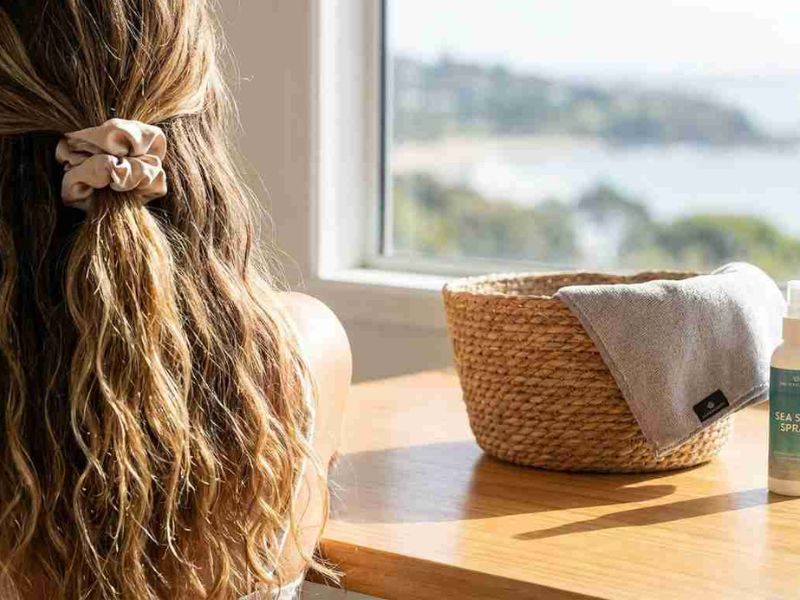
Beach waves look relaxed, soft, and a little messy in the best way. The problem is that many beach-wave tutorials rely on curling wands and flat irons, which can dry out your hair over time and lead to split ends and breakage.
If you want the same texture without the damage, you have plenty of options. This guide explains how to style beach waves without heat damage using simple, repeatable methods that work for different hair types and schedules.
Why heatless beach waves are worth it?
Heat tools can be fine sometimes, but daily or frequent use adds up. Heatless waves give you the look while keeping your hair healthier.
Common signs your hair is getting heat-stressed
- Ends feel rough or crunchy
- More breakage when brushing
- Split ends that come back quickly after trims
- Hair won’t hold moisture and feels dry fast
- Curl pattern looks uneven or limp
What makes heatless waves work
Heatless styling relies on three things:
- Slightly damp hair (not dripping wet)
- Tension and shape (braids, twists, rollers, or wraps)
- Drying time (air-dry, overnight, or diffusing on cool)
Read More: Stay Cool And Look Chic With Airy Hot Weather Summer Outfits
Prep step: the foundation for long-lasting waves
Heatless waves can fall flat if the prep is off. A few small adjustments make a big difference.
Start with the right dampness level
Aim for hair that is about 70–85% dry. If hair is too wet, it may not dry evenly and the wave can turn into frizz. If hair is too dry, it may not “set” into the shape.
A simple test: squeeze a section. It should feel cool and slightly damp, but not release water.
Use a light styling product for hold
You don’t need heavy products, but you do need a little grip. Good options include:
- Lightweight mousse
- Curl cream (use a small amount)
- Texturizing foam
- Leave-in conditioner for slip (especially for dry hair)
- A light-hold gel diluted with water (great for frizz control)
If your hair gets weighed down easily, use less product and keep it off the roots.
Detangle gently before you set the style
Detangle with a wide-tooth comb or a gentle brush while damp. If you set braids or twists on tangled hair, the final result often looks uneven.
Best heatless methods for beach waves
These methods create different wave sizes. Pick one based on how much time you have and what kind of waves you like.
Overnight braids for classic beach texture
Braids are one of the easiest ways to get true “beachy” waves because they create a natural, uneven pattern.
How to do it:
- Start with slightly damp hair
- Apply a small amount of mousse or texturizing foam
- Divide hair into 2 braids for loose waves or 4–6 braids for stronger texture
- Braid to the ends and secure with soft scrunchies
- Sleep on it, then gently undo in the morning
- Separate with fingers, not a brush
Tip for more natural waves: braid loosely near the roots and tighter toward the middle.
Two-strand twists for softer, more modern waves
Twists usually give a smoother wave than braids and can look more polished.
How to do it:
- Split damp hair into 2–6 sections
- Twist each section away from your face
- Coil into small buns and pin, or secure the twist ends
- Let dry fully (overnight works best)
- Undo and shake out gently
If your hair frizzes easily, add a tiny amount of cream before twisting and avoid over-touching once dry.
Heatless curling ribbon or robe tie for “blowout beach waves”
This method creates larger, looser bends that can still look beachy when you break them up with texture spray.
How to do it:
- Place the ribbon/robe tie over the top of your head
- Wrap damp hair around it, section by section
- Secure ends with scrunchies
- Sleep on it or wait until fully dry
- Take it out and separate the waves with your fingers
For a more beach-like finish, scrunch in a light texturizing spray after.
Foam rollers for defined waves with less frizz
Foam rollers are great if you want consistent waves and a smoother result.
How to do it:
- Apply mousse to damp hair
- Roll medium sections away from the face
- Let dry fully (overnight is easiest)
- Remove rollers and loosen with fingers
If you want less “curl” and more “wave,” use larger rollers and don’t roll too close to the scalp.
The quick bun method for loose, easy waves
This is ideal when you want something simple and casual.
How to do it:
- Start with slightly damp hair
- Make one high bun for looser waves, or two buns for more texture
- Twist hair before wrapping into the bun
- Secure with scrunchies (avoid tight elastics)
- Let dry completely
- Undo and finger-comb
This method is fast, but it can leave flatter roots. Add volume at the crown with a light root spray if needed.
Table: choose the best heatless wave method for your schedule
| Method | Best for | Time needed | Wave result |
|---|---|---|---|
| 2 braids overnight | Easy, true beach texture | 6–8 hours | Loose, natural waves |
| 4–6 braids overnight | Fine hair or stubborn hair | 6–8 hours | Stronger texture, more volume |
| Two-strand twists | Softer, smoother waves | 4–8 hours | Polished beach waves |
| Curling ribbon/robe tie | Big, airy bends | 6–8 hours | Loose waves, “blowout” feel |
| Foam rollers | Defined waves, less frizz | 6–8 hours | Smooth, consistent waves |
| One or two buns | Quick and casual | 2–6 hours | Loose waves, slightly uneven |
How to make heatless beach waves last all day
The wave pattern matters, but so does how you finish.
Make sure hair is fully dry before you take it down
This is the most common reason waves fall out. If you’re unsure, give it another 20–30 minutes or use a cool setting on a blow dryer from a distance.
Separate with fingers, not a brush
Brushing breaks up the pattern and can turn waves into frizz. Instead:
- Use your fingers to split sections
- Shake at the roots gently for volume
- If needed, use a wide-tooth comb on the ends only
Add texture after, not before (when needed)
If you use too much texturizing spray before setting the style, hair can feel sticky. A better approach is:
- Use mousse or foam on damp hair for hold
- Use texture spray lightly on dry hair for that beach finish
- Finish with a light hairspray if your hair falls flat fast
Sleep-smart if you’re doing overnight waves
- Use a satin or silk pillowcase to reduce frizz
- Keep braids/twists secured with soft scrunchies
- Try a loose top knot or “pineapple” if you’re protecting natural wave
Beach waves without heat by hair type
Your hair type changes which method works best and how much hold you need.
Fine hair
Fine hair can lose waves quickly, so focus on hold without heaviness.
- Try 4–6 braids or smaller twists
- Use a lightweight mousse
- Finish with a light mist of hairspray
- Avoid heavy oils before styling
Thick hair
Thick hair needs enough sectioning and enough drying time.
- Use 4–8 sections for twists or braids
- Make sure hair is not too wet
- Consider foam rollers for a more even result
Straight hair that doesn’t hold a wave
You’ll need more structure and stronger setting.
- Smaller braids or tighter twists
- A setting product like mousse or a light gel
- Keep the style in longer and let it dry completely
- Add texture spray after taking it down
Wavy hair
Wavy hair usually holds heatless styling well.
- Try two braids or a robe tie wrap
- Use curl cream sparingly for definition
- Scrunch gently after taking it down
Curly hair
Curly hair can do beautiful beach waves, but it depends on your natural curl pattern and your goal.
- Stretch curls with braids or twists
- Use a moisturizing leave-in and a bit of gel for frizz control
- Do not separate too much once dry
Table: product guide for heatless beach waves
| Hair concern | Best product type | How to use it |
|---|---|---|
| Waves fall out fast | Lightweight mousse or foam | Work through damp mid-lengths to ends |
| Frizz and puffiness | Curl cream or leave-in | Use a small amount on damp hair |
| Flat roots | Root-lift spray or volumizing foam | Apply at roots before braiding/twisting |
| Too much softness, not enough “beach” | Texturizing spray | Mist lightly on dry waves, then scrunch |
| Dry ends | Light serum or oil | Smooth a tiny amount on ends after styling |
Common mistakes that cause frizz or limp waves
Taking the style down too early
If hair is even slightly damp inside the braid or twist, it will relax quickly and may frizz.
Using too much product
More product does not always mean more hold. Too much cream or oil can make waves slide out.
Making sections uneven
Uneven sections lead to uneven waves. They can still look cute and beachy, but if you want a cleaner result, take an extra minute to section properly.
Touching the hair too much after
Once waves are set, too much fluffing breaks them apart. Shape it, set it, then leave it alone.
A simple routine you can follow every time
Night-before routine
- Wash or lightly dampen hair
- Apply mousse or foam
- Choose braids, twists, or ribbon wrap
- Sleep on a satin pillowcase
Morning routine
- Make sure hair is fully dry
- Undo gently
- Separate with fingers
- Add texture spray lightly
- Finish with light hairspray if needed
Conclusion
Learning how to style beach waves without heat damage is mostly about using the right method for your hair type and giving it enough time to dry and set. Braids and twists are the easiest place to start, while rollers or a curling ribbon can give a more styled wave.
With light hold products, gentle handling, and a good finishing routine, you can get that beachy texture again and again without stressing your hair.