

If you’ve been seeing the butterfly haircut everywhere, you’re not imagining it. It’s one of the most requested layered cuts right now because it gives hair more movement and shape without losing much length. It can also make hair look fuller and bouncier, especially around the face.
This article explains what is a butterfly haircut and who does it suit, plus what to ask your stylist for, how to style it, and who may want a different option.
What is a butterfly haircut?
A butterfly haircut is a layered haircut that creates two main “levels” of shape:
- Shorter layers around the face and crown for lift
- Longer layers through the length to keep a full, flowing look
The idea is that the hair looks light and airy at the top (like wings) while still keeping longer hair underneath.
Why it’s called the butterfly haircut?
The name comes from how the layers fall and flip when styled. The shorter face-framing pieces create a soft, wing-like shape, especially when you blow-dry the hair away from the face.
Key features of a butterfly haircut
Lots of face-framing layers
This cut usually starts with face-framing layers that can look similar to curtain bangs, even if you don’t get an actual fringe. These layers highlight the cheekbones and jawline.
Volume at the crown
A butterfly haircut is designed to lift the top section so hair doesn’t look flat. The shorter crown layers help create that “salon blowout” effect.
Length stays (mostly) intact
Many people choose this cut because it gives a big change without cutting off long hair. The length remains, but the shape looks different.
Works best with a blowout style
This haircut really shows off when hair is round-brushed or heat-styled with bounce. It can still look good air-dried, but the “butterfly” look is strongest with styling.
Butterfly haircut vs. other layered haircuts
The butterfly haircut gets compared to other popular cuts, but it has a specific feel.
How it’s different from long layers
Regular long layers are usually softer and more evenly blended throughout. A butterfly haircut often has more noticeable layering around the face and crown to create a bigger “lifted” shape.
How it’s different from a wolf cut
A wolf cut is choppier and more edgy, with stronger contrast between layers and often more texture. The butterfly haircut is typically smoother, bouncier, and more “blowout” looking.
Table: quick comparison
| Haircut | Overall vibe | Layering style | Best for |
|---|---|---|---|
| Butterfly haircut | Soft, bouncy, 90s-inspired | Face-framing + crown lift + long length | People who want volume without losing length |
| Long layers | Natural and subtle | Even layers through lengths | People who want gentle movement |
| Wolf cut | Textured and edgy | Choppy layers with stronger contrast | People who want a bold, messy look |
| Shag | Lived-in and textured | Lots of layers and often a fringe | People who like effortless texture |
Who does the butterfly haircut suit?
The butterfly haircut is pretty flexible, but it shines on certain hair types and goals.
It suits you if you want more volume
If your hair feels heavy, flat, or one-length and dull, this cut can bring back bounce. The crown layers help lift the roots, and the face-framing layers add shape.
It suits you if you like a polished, styled look
If you enjoy blowouts, rollers, or round-brush styling, you’ll probably love this haircut. It’s made to move.
It suits many face shapes
Because the cut includes face-framing layers, it can be adjusted to flatter different features.
- Round faces: longer face-framing layers can visually elongate the face
- Oval faces: most versions work well, including shorter face-framing
- Square faces: soft layers can balance a stronger jawline
- Heart-shaped faces: layers can soften the forehead area and highlight cheekbones
A stylist can place the shortest layer at a point that flatters your face best (cheekbone, lip, chin, or below).
It suits medium to long hair best
The butterfly haircut is usually done on hair that sits around the shoulders or longer. The “two-level” effect shows better when there is enough length to keep the bottom full.
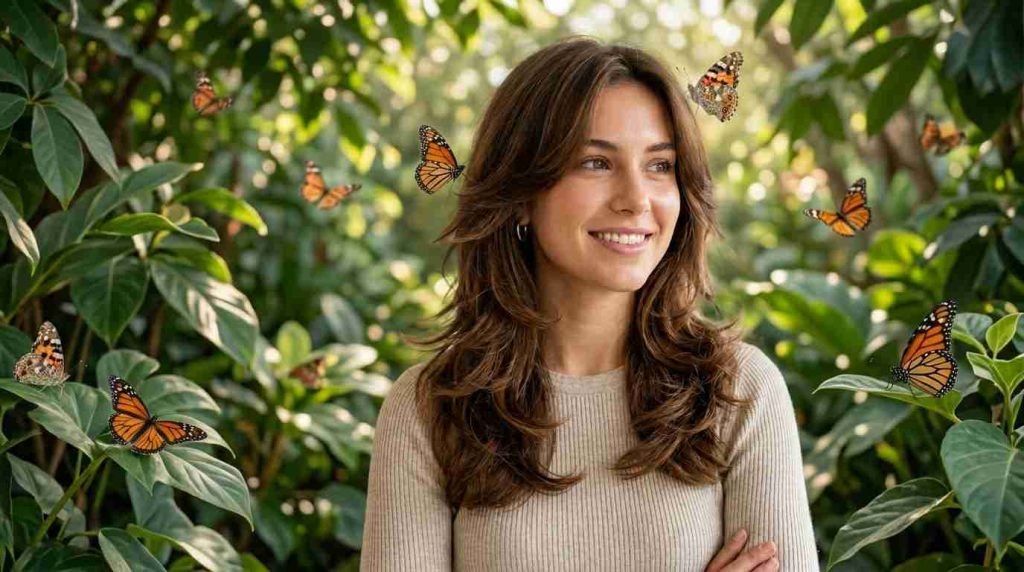
Who might not love the butterfly haircut?
This haircut is not wrong for anyone, but it may not match your lifestyle or hair needs.
If you prefer wash-and-go hair
You can wear it naturally, but it may look less dramatic without styling. If you don’t want to blow-dry or use hot tools often, ask for softer, lower-maintenance layers.
If your hair is very fine and sparse at the ends
Layers remove weight. If your ends already look thin, too many layers can make the length look even more wispy. In that case, a lighter version with fewer layers might be better.
If your hair is very curly
Curly hair can absolutely be layered, but the classic butterfly look is designed around a bouncy blowout finish. If you wear your curls natural, you’ll want a curl-specialist approach so the layers sit correctly when dry.
Best hair types for a butterfly haircut
Straight hair
It can look sleek and airy, but it may need styling to show the “winged” movement. A blowout or soft curls help a lot.
Wavy hair
Wavy hair is often perfect for this cut. The layers create movement naturally, and you can style it with minimal effort.
Thick hair
This haircut can remove bulk and add shape so thick hair doesn’t feel heavy. A stylist can also use internal layering to prevent the triangle look.
Table: suitability by hair type
| Hair type | How the butterfly haircut typically looks | What to ask for |
|---|---|---|
| Fine hair | Fuller at the top, can look thinner at ends if over-layered | Fewer layers, keep strong perimeter |
| Medium hair | Balanced, bouncy, easy to style | Standard butterfly layering |
| Thick hair | Lighter and more shaped, less heavy | Debulking + blended layers |
| Curly hair | Can be flattering, but needs curl-aware layering | Dry cut or curl-specialist shaping |
What to ask your stylist for
Clear communication makes a big difference with this cut.
Bring photos of the exact finish you want
Butterfly haircut photos can look different depending on styling. Bring pictures showing:
- The length you want to keep
- How short you want the face-framing layers
- Whether you like a big blowout look or softer movement
Use simple, specific wording
Try saying:
- “I want long hair, but with lots of face-framing layers and lift at the crown.”
- “I want the shortest layer to start at my cheekbone/chin/lips.”
- “I want it blended, not choppy.”
Ask how it will grow out
A well-done butterfly haircut usually grows out nicely, but it’s smart to ask what it will look like in 6–8 weeks and when you should trim it.
How to style a butterfly haircut at home
The easiest styling method: round-brush blowout
- Use a root-lifting product at the crown
- Blow-dry the top section up and back
- Round-brush the face-framing pieces away from the face
- Finish with a light spray for hold
Heatless options
If you want less heat:
- Velcro rollers for crown lift
- Heatless curling ribbon for soft bends
- Large clips to set the face-framing layers while hair dries
Products that help
- Lightweight mousse or volumizing spray
- Heat protectant (if using hot tools)
- A small amount of smoothing serum on the ends
Avoid heavy oils near the roots, since they can flatten the lift.
How to maintain a butterfly haircut
How often to trim
Most people do well with a trim every 8–12 weeks. If you style often and want the shape to stay sharp, you may prefer 6–8 weeks.
Keep layers healthy
Layers show dryness faster than one-length hair. Use:
- Conditioner on every wash
- A weekly hair mask if hair feels dry
- Gentle brushing to reduce breakage
Conclusion
So, what is a butterfly haircut and who does it suit? It’s a layered haircut that creates volume at the crown and flattering face-framing pieces while keeping most of your length.
It suits people who want movement, softness, and a bouncy look—especially on medium to long hair. If you love the idea of a blowout-friendly cut with a modern, pretty shape, the butterfly haircut is a strong choice.