
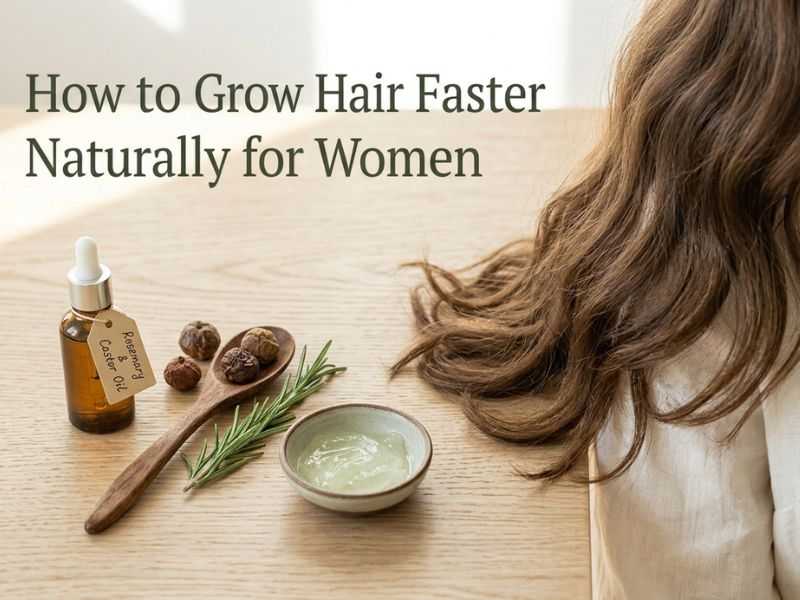
If you’re trying to figure out how to grow hair faster naturally for women, it helps to know one important truth first: hair growth speed is partly genetic. Most women’s hair grows around half an inch per month on average.
You may not be able to “double” that naturally, but you can support faster-looking growth by improving scalp health, reducing breakage, and giving your body the nutrients it needs to keep more hairs in the growth phase.
Read More: Best Short Bob Hairstyles for Thin Fine Hair With a Round Face!
What “Faster Hair Growth” Really Means
Growing hair faster naturally usually comes down to two things:
- Supporting healthy growth at the scalp (so new hair grows in well)
- Keeping the length you grow (so hair doesn’t break off before you notice progress)
Many women think their hair “isn’t growing,” when it’s actually growing but breaking at the ends due to heat, color damage, tight styles, or dryness.
Start With the Basics: Scalp Health Comes First
A healthy scalp is the foundation for healthy hair. If your scalp is oily, flaky, itchy, or inflamed, growth can feel slower and shedding may increase.
Clean your scalp regularly (not just your hair)
You don’t need harsh shampooing every day, but you do need a clean scalp.
- If your scalp gets oily quickly, more frequent washing can help.
- If your hair is dry or curly, you may wash less often—but still focus on the scalp when you do.
Product buildup can make hair look dull and limp, and it can clog follicles for some people.
Treat dandruff or itching early
Flaking and itching are often signs of dandruff or irritation. Leaving it untreated can increase shedding.
If you have persistent flakes, redness, or burning, consider a dandruff shampoo (like ketoconazole or zinc pyrithione) and see a dermatologist if it doesn’t improve.
Try gentle scalp massage
Scalp massage won’t create instant growth, but it can support circulation and help you stay consistent with scalp care.
Aim for 3–5 minutes a day using fingertips (not nails). Be gentle—too much rubbing can cause breakage at the roots.
Eat for Hair Growth: The Natural “Supplement” Most People Miss
Hair is made mostly of protein, and hair follicles are very sensitive to low nutrients. If you’re under-eating, skipping protein, or low in key minerals, hair growth often slows and shedding increases.
Hair-growth nutrients and easy food sources
| Nutrient | Why it matters | Easy foods to include |
|---|---|---|
| Protein | Builds hair structure (keratin) | Eggs, Greek yogurt, chicken, tofu, beans |
| Iron | Helps deliver oxygen to follicles | Lean red meat, lentils, spinach, fortified cereals |
| Vitamin C | Helps iron absorption; supports collagen | Citrus, berries, kiwi, bell peppers |
| Omega-3 fats | Supports scalp and hair softness | Salmon, sardines, chia seeds, flaxseed, walnuts |
| Vitamin D | Supports normal hair follicle cycling | Fatty fish, egg yolks, fortified milk/foods |
| Zinc | Supports follicle repair and growth | Pumpkin seeds, beef, chickpeas, oysters |
If you’re often tired, have heavy periods, or are postpartum, iron and vitamin D are especially worth paying attention to.
Don’t diet too hard if you want longer hair
Fast weight loss, very low-calorie diets, or cutting out major food groups can trigger shedding (often 2–3 months later). If you want long hair, steady nutrition usually beats extreme dieting.
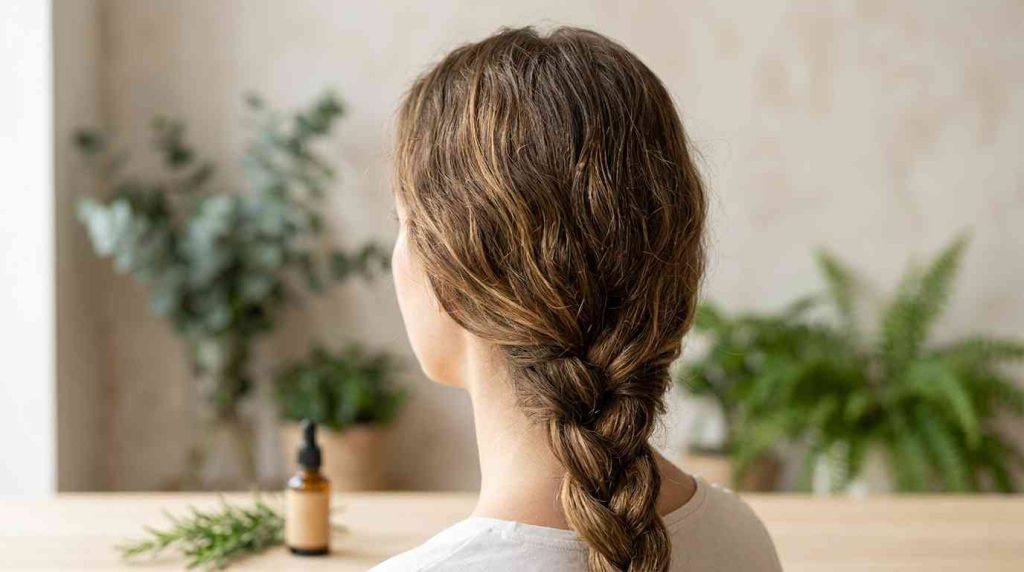
Protect Your Length: Reduce Breakage for Faster Results
If you want hair to look like it’s growing faster, protecting the ends is a big deal. Breakage can cancel out months of growth.
Use heat less often (and use it smarter)
Hot tools can damage the hair cuticle, leading to splitting and snapping.
- Lower your heat setting whenever possible
- Always use a heat protectant
- Avoid repeated passes on the same section
If you can reduce hot tools by even 1–2 days per week, many women notice better length retention.
Avoid tight hairstyles that pull on the roots
Constant tension from tight ponytails, slick buns, heavy extensions, or tight braids can cause traction hair loss over time—especially around the hairline.
Choose looser styles and change your part sometimes to reduce stress in one spot.
Be careful with wet hair
Wet hair is more fragile.
- Use a wide-tooth comb
- Detangle gently from ends to roots
- Don’t twist hair tightly in a towel (use a soft towel or cotton T-shirt)
Trim for health (but know the truth)
Trimming does not make hair grow from the scalp faster. But trimming can prevent splits from traveling upward, which helps you keep length and reduces that “stuck at the same length” feeling.
Natural Oils and Treatments: What Helps and How to Use Them Safely
Natural treatments can support scalp health and reduce breakage, but they work best as part of a bigger routine.
Rosemary oil (one of the best-studied natural options)
Rosemary oil has some evidence for supporting hair growth, and many women use it as a natural scalp treatment.
How to use it safely:
- Always dilute it in a carrier oil (like jojoba, argan, or coconut oil)
- Patch test first
- Apply to scalp 2–4 times per week and wash out as needed
If you have a sensitive scalp, start with a very low dilution.
Coconut oil (best for reducing protein loss and breakage)
Coconut oil can help protect hair shafts, especially for some hair types.
- Use a small amount on mid-lengths and ends
- Avoid heavy oil on the scalp if you’re prone to buildup or dandruff
Aloe vera (for soothing, not “instant growth”)
Aloe can feel calming on an irritated scalp. It may help with dryness and comfort, which supports healthier scalp conditions over time.
Choose simple formulas and avoid anything that stings or causes redness.
A Simple Weekly Routine to Support Natural Hair Growth
Consistency matters more than having a complicated routine. Here’s a balanced approach you can adjust to your hair type.
Natural hair growth routine (easy and realistic)
| Frequency | What to do | Why it helps |
|---|---|---|
| Daily | Gentle scalp massage (3–5 min) | Supports scalp care consistency |
| 2–4x weekly | Wash scalp as needed for your oil level | Keeps follicles and scalp clean |
| 1x weekly | Deep condition or mask on lengths | Helps reduce dryness and breakage |
| 2–4x weekly | Diluted rosemary oil (optional) | Natural scalp support for some women |
| Always | Heat protectant + lower heat | Prevents breakage |
| Nightly | Satin/silk pillowcase or loose braid | Reduces friction and snapping |
Lifestyle Habits That Affect Hair Growth More Than You Think
Hair growth is strongly affected by what’s happening in your body overall.
Manage stress (because shedding is often delayed)
Stress-related shedding often shows up weeks or months after a stressful event. Simple habits help:
- Regular walks or light exercise
- Relaxation routines before bed
- Breathing exercises or journaling
- Getting support when stress is ongoing
Sleep matters for hair
Poor sleep can affect hormones and recovery. Aim for consistent sleep and a regular bedtime as often as you can.
Check your iron, vitamin D, and thyroid if shedding is persistent
If you’re doing “everything right” and still shedding a lot, it may not be a routine problem. Low iron (ferritin), low vitamin D, and thyroid issues are common in women and can slow growth or increase shedding.
Common Myths About Growing Hair Faster Naturally
There’s a lot of advice online that sounds good but doesn’t hold up well.
Myths vs facts
| Myth | The truth |
|---|---|
| “Trimming makes hair grow faster” | Trimming prevents split ends, but growth happens at the scalp |
| “Brushing 100 strokes a day makes hair grow” | Over-brushing can cause breakage and irritation |
| “More oils = more growth” | Heavy oils can cause buildup; the scalp still needs balance |
| “Hair vitamins work for everyone” | Vitamins help most if you’re deficient; otherwise results may be limited |
When to See a Professional
Natural methods are great for general hair health, but some hair loss needs medical attention.
Consider seeing a dermatologist if you notice:
- Bald patches
- Sudden heavy shedding that lasts longer than 2–3 months
- Scalp pain, burning, thick scaling, or redness
- A widening part that keeps worsening
- Thinning at the temples or hairline that doesn’t improve
Early care matters, especially for female pattern hair loss, traction hair loss, and inflammatory scalp conditions.
Conclusion: How to Grow Hair Faster Naturally for Women
Learning how to grow hair faster naturally for women is mostly about supporting healthy growth and keeping the length you grow. Focus on scalp health, strong nutrition (especially protein and iron-rich foods), gentle styling, and consistent routines that reduce breakage.
Add natural options like diluted rosemary oil if your scalp tolerates it, and be patient—visible results usually take a few months.
If shedding is heavy or persistent, consider getting basic labs checked and talking with a professional so you’re not guessing.