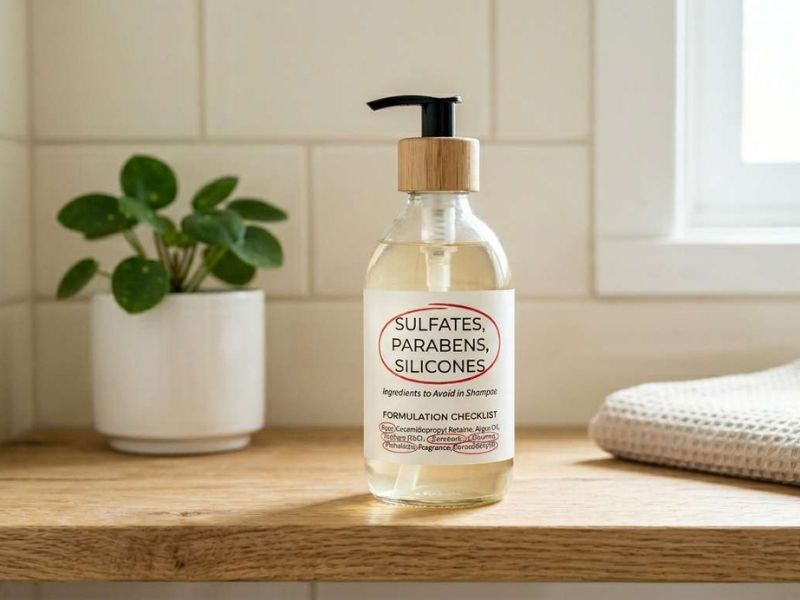
Healthy hair starts at the scalp, and your shampoo plays a bigger role than most people think. The wrong formula can leave hair dry, irritated, frizzy, or weighed down over time. But shopping can be confusing because labels are long and “natural” claims are not always clear.
This article explains what ingredients to avoid in shampoo for hair health in plain English. You’ll learn which common ingredients may cause problems, who should avoid them most, and what to look for instead.
Why Shampoo Ingredients Matter for Hair Health?
Shampoo is made to clean your scalp and hair, but cleansing can come with side effects. Some ingredients strip natural oils too strongly, some cause buildup, and others may irritate a sensitive scalp.
Hair health is not just about shine. It also includes scalp comfort, reduced breakage, better moisture balance, and less color fading if your hair is dyed.
How to Read a Shampoo Label Without Stress?
Ingredients are listed from highest amount to lowest amount. This means the first 5–8 ingredients usually make up most of the formula.
Fragrance, dyes, and strong preservatives often appear near the end, but they can still affect sensitive scalps. If you are reactive, even small amounts can matter.
“Free-From” Labels Can Be Helpful, But Not Perfect
“Sulphate-free” or “paraben-free” can be useful shortcuts, but don’t rely on marketing alone. Two shampoos can both be “sulfate-free” while one still feels harsh because of other strong cleansers.
Patch Testing Helps If You’re Sensitive
If you often itch, burn, or get flakes after washing, try patch testing a new shampoo on a small area of skin behind the ear or on the inner arm before using it regularly.
What Ingredients to Avoid in Shampoo for Hair Health?
Not every ingredient is “bad” for every person. Your hair type, scalp type, and how often you wash all matter. Still, the ingredients below are the ones most commonly linked to dryness, irritation, or buildup.
Sulfates (Harsh Cleansers)
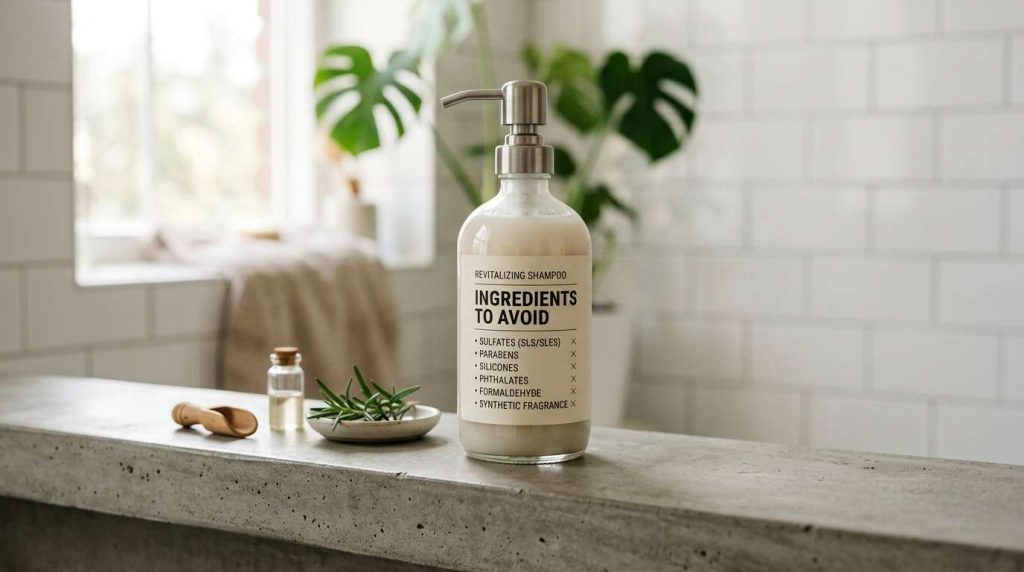
Sulfates are strong detergents that create a lot of foam. They remove oil very effectively, which is why they can leave hair feeling squeaky clean.
Common names to watch for:
- Sodium Lauryl Sulfate (SLS)
- Sodium Laureth Sulfate (SLES)
- Ammonium Lauryl Sulfate (ALS)
These can be especially drying for curly, textured, color-treated, or damaged hair. They may also bother a sensitive or eczema-prone scalp.
Strong Fragrance and “Parfum”
“Fragrance” or “parfum” is a common trigger for scalp irritation and allergic reactions. It’s tricky because companies do not have to list every fragrance chemical individually.
If your scalp feels itchy after washing, switching to fragrance-free (not just “lightly scented”) can make a big difference.
Formaldehyde-Releasing Preservatives
These preservatives help products last longer, but some people prefer to avoid them due to irritation concerns.
Common names include:
- DMDM Hydantoin
- Diazolidinyl Urea
- Imidazolidinyl Urea
- Quaternium-15
If you have a very reactive scalp or unexplained itching, these are worth checking for.
Isothiazolinones (MI/MCI)
These preservatives are effective, but they are also known for causing contact allergies in some people.
Look for:
- Methylisothiazolinone (MI)
- Methylchloroisothiazolinone (MCI)
If you get red patches, burning, or persistent scalp sensitivity, consider avoiding shampoos with MI/MCI.
Parabens (If You Prefer to Avoid Them)
Parabens are preservatives. Many people avoid them by choice, and some prefer simpler formulas for sensitive skin.
Common names:
- Methylparaben
- Propylparaben
- Butylparaben
If parabens have never bothered you, they are not automatically harmful for everyone. But if you want a short ingredient list, this is one category people often remove first.
Drying Alcohols (Different From Fatty Alcohols)
Some alcohols can feel drying, especially in shampoos made for “deep cleansing” or oil control.
Often avoided:
- Alcohol denat.
- SD alcohol
- Isopropyl alcohol
Not all alcohols are bad. Fatty alcohols like cetyl alcohol and stearyl alcohol usually help soften hair and are generally not the issue.
Heavy, Water-Insoluble Silicones (Buildup Risk)
Silicones can make hair feel smooth and shiny, but some types can build up over time, especially if you don’t clarify occasionally. Buildup can make hair feel dull, flat, or coated.
Common ones:
- Dimethicone
- Amodimethicone
- Trimethicone
If your hair gets weighed down easily or you have fine hair, you may prefer lighter formulas or occasional clarifying.
Cocamide DEA (Foam Booster)
Cocamide DEA is used to thicken shampoo and boost foam. Some people avoid it due to irritation concerns and personal preference.
Look for:
- Cocamide DEA
Phthalates (Often Hidden in Fragrance)
Phthalates are not always listed clearly because they may be part of “fragrance.” Many people try to avoid them by choosing fragrance-free products.
You may see:
- DEP (diethyl phthalate) sometimes, but often it’s not listed directly
Added Dyes and Colorants
Dyes make shampoo look pretty, but they add no hair-health benefit and can irritate sensitive scalps.
Watch for:
- FD&C color names (like FD&C Yellow)
- CI numbers (like CI 19140)
Quick Table: Common Ingredients to Avoid and Better Options
Use this as a fast shopping guide.
| Ingredient type | What it may look like on the label | Why some people avoid it | What to look for instead |
|---|---|---|---|
| Harsh sulfates | SLS, SLES, ALS | Can strip oils, fade color, increase frizz | Glucosides (decyl/lauryl), isethionates, sarcosinates |
| Strong fragrance | Fragrance, parfum | Common irritant/allergy trigger | Fragrance-free or low-scent formulas |
| Formaldehyde releasers | DMDM Hydantoin, Quaternium-15 | Can irritate sensitive scalps | Gentler preservative systems (brand varies) |
| MI/MCI preservatives | Methylisothiazolinone, Methylchloroisothiazolinone | Can trigger contact allergy | MI/MCI-free sensitive scalp shampoos |
| Drying alcohols | Alcohol denat., SD alcohol | Can feel drying on hair/scalp | Alcohol-free or moisturizing formulas |
| Heavy silicones | Dimethicone, amodimethicone | Buildup, limp hair for some | Lightweight conditioners, occasional clarifying |
| Dyes | CI numbers, FD&C colors | No benefit, irritation for some | Dye-free formulas |
Ingredient Choices Based on Your Hair and Scalp Needs
People often buy the wrong shampoo because they shop for hair goals but ignore scalp type. These pairings can help.
If You Have a Sensitive or Itchy Scalp
A sensitive scalp usually does best with fewer triggers. Look for gentle cleansers and minimal fragrance.
Avoiding fragrance, MI/MCI, and harsh sulfates is often a good starting point. If symptoms continue, a dermatologist can help rule out dermatitis, psoriasis, or allergy.
If Your Hair Is Dry, Curly, or Frizzy
Dry or curly hair usually needs a shampoo that cleans without stripping. Sulfates and frequent clarifying can make frizz worse.
Look for sulfate-free cleansers, moisturizing ingredients (like glycerin), and a conditioner that matches your hair’s needs.
If You Have Oily Roots
Oily hair doesn’t always need the strongest shampoo. Over-stripping can sometimes make your scalp feel irritated and may lead to more oiliness for some people.
Try a balanced cleanser and wash consistently. If buildup is the issue, a gentle clarifying wash once in a while may help more than harsh daily shampoo.
If Your Hair Is Color-Treated
Color fades faster when the shampoo is too harsh. Sulfates and very strong cleansing shampoos are common culprits.
Choose color-safe, gentle cleansers and avoid frequent deep-cleansing unless you truly need it.
Helpful Table: What to Choose Based on Your Goal
This table makes it easier to match products to real-life needs.
| Your main goal | Ingredients to be careful with | What usually works better |
|---|---|---|
| Less frizz | Strong sulfates, drying alcohols | Gentle cleansers + moisturizing conditioner |
| Less scalp itching | Fragrance/parfum, MI/MCI, formaldehyde releasers | Fragrance-free, sensitive scalp formulas |
| More volume | Heavy silicones, heavy oils in shampoo | Lightweight formulas, occasional clarifying |
| Protect color | Strong sulfates, frequent deep cleansers | Color-safe, sulfate-free shampoo |
| Less buildup | Heavy silicones without clarifying | Occasional clarifying + lighter daily shampoo |
A Few Common Shampoo Myths That Confuse People
Shampoo advice online can be extreme. These points help you make smarter choices.
“Natural” Doesn’t Always Mean Gentle
A product can be “natural” and still irritate your scalp. Essential oils, heavy fragrance, and some plant extracts can be triggering for sensitive skin.
Foam Doesn’t Mean Better Cleaning
Lots of foam is often just stronger surfactants. A gentle shampoo may lather less but still clean well.
You Don’t Need to Avoid Everything at Once
If you’re changing shampoos because of dryness or itching, start by removing the biggest triggers first (often sulfates and strong fragrance). Then adjust based on results.
Conclusion
Knowing what ingredients to avoid in shampoo for hair health can save you time, money, and a lot of bad hair days.
The biggest red flags for many women are harsh sulfates, strong fragrance, and certain preservatives that can trigger irritation. For others, the main issue is buildup from heavier silicones or formulas that feel too heavy.
The best shampoo is the one that cleans your scalp comfortably and leaves your hair soft, not stripped. Choose gentle cleansers, keep your routine simple, and adjust based on how your scalp and hair actually feel after a few weeks of use.