
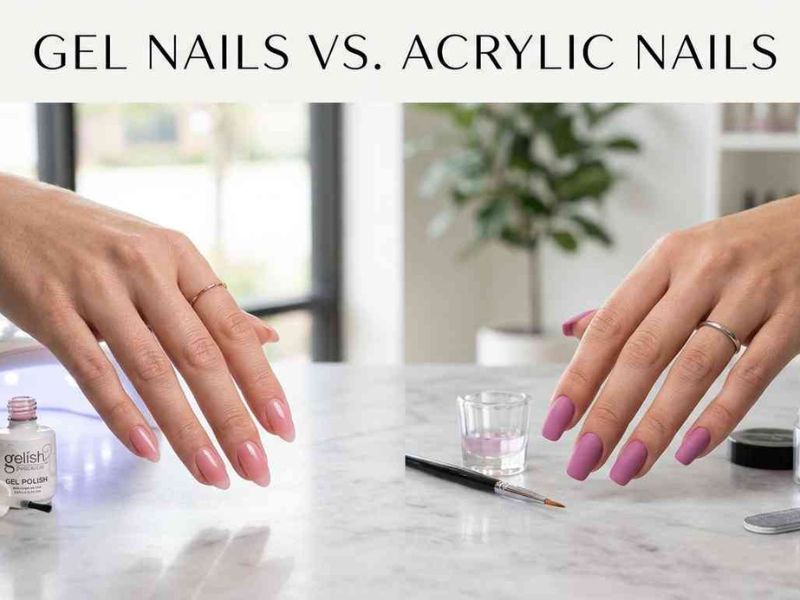
Gel and acrylic nails can both give you longer, stronger-looking nails that last for weeks. But they are not the same product, and they behave differently on your hands. The best choice depends on your lifestyle, nail condition, budget, and how much maintenance you’re comfortable with.
This guide explains the real difference between gel and acrylic nails in simple terms, including how they’re applied, how long they last, how they’re removed, and which one may be better for you.
Quick Answer: Gel vs Acrylic Nails
Gel nails are cured under a UV/LED lamp and often feel lighter and more flexible. Acrylic nails are created by mixing liquid and powder into a hard coating or extension that air-dries and tends to be stronger and more rigid.
Gel Nails: What They Are and How They Work
Gel nails use gel-based products that harden (cure) under a UV or LED lamp. “Gel nails” can mean a few different services, but the most common are:
Gel polish
Gel polish is a long-wear polish that goes on like nail polish and cures under a lamp. It does not usually add much length unless paired with tips or overlays.
Hard gel or builder gel
Hard gel/builder gel is thicker and can add strength and sometimes length. It’s shaped on the nail and cured under a lamp.
Gel nails usually look glossy and natural. Many people like them because they feel lighter and can be more flexible than acrylic.
Acrylic Nails: What They Are and How They Work
Acrylic nails are made by combining a liquid monomer and a powder polymer to form a paste. This paste is applied over the natural nail or a nail tip and then shaped. It hardens as it’s exposed to air (no lamp needed for standard acrylic).
Acrylics are known for:
- Strong structure
- Easy shaping for longer lengths
- Good durability for people who are rough on their nails
Because acrylic dries hard, it can feel more rigid than gel.
Main Differences Between Gel and Acrylic Nails
Comparison table: gel vs acrylic nails
| Feature | Gel nails | Acrylic nails |
|---|---|---|
| How it hardens | Cures under UV/LED lamp | Air-dries after liquid + powder mix |
| Look and feel | Often glossy, lightweight, slightly flexible | Very strong, more rigid, structured |
| Best for | Natural-looking finish, moderate strength, overlays | Strong extensions, dramatic length, heavy-duty wear |
| Odor during application | Usually low odor | Stronger chemical smell during application |
| Durability | Strong, but can lift or chip depending on type | Very durable; good for long lengths |
| Removal | Usually soak-off for gel polish; hard gel often needs filing | Typically requires soaking in acetone (plus filing) |
| Maintenance | Regular fills for builder/hard gel; gel polish often removed and redone | Fills every 2–3 weeks are common |
| Typical risk | Peeling if picked; over-filing can thin nails | Over-filing, harsh removal can thin nails |
Which Lasts Longer: Gel or Acrylic?
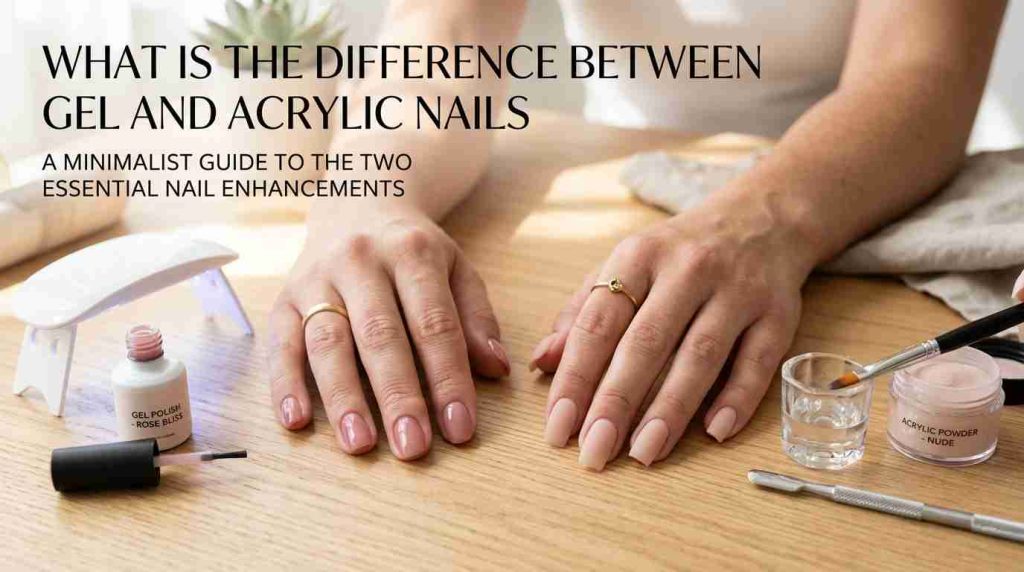
Both can last about 2–3 weeks before you see growth and need maintenance. Longevity depends on the product type and your habits.
In general
- Acrylic nails often hold up better if you want long extensions or use your hands a lot.
- Gel nails can last just as long for many people, especially builder gel overlays, but they may be more prone to lifting if the prep or application is not done well.
Which Is Better for a Natural Look?
Gel usually wins if you want a “your nails but better” look.
Why gel often looks more natural
- It can be thinner and smoother
- It tends to have a glassy shine
- It can flex slightly, which can look more like a natural nail
That said, a skilled nail tech can make acrylic look very natural too. Technique matters as much as the product.
Which Is Stronger: Gel or Acrylic?
Acrylic is usually stronger for long length and heavy wear.
Strength vs flexibility
- Acrylic is typically harder and more rigid, which can be helpful for long nails.
- Gel can be strong but slightly flexible, which some people prefer because it may feel more comfortable.
If your nails break from bending, acrylic structure can help. If your nails snap because they feel too rigid, gel may feel better.
Which Damages Nails More?
Neither gel nor acrylic has to “ruin” your nails. Most damage comes from:
- Aggressive filing of the natural nail
- Picking or peeling product off
- Poor removal methods
- Repeated back-to-back sets without care
Common damage patterns
- Gel polish damage often happens when people peel it off, taking layers of the nail with it.
- Acrylic damage often happens from over-filing during prep or removal, or from prying enhancements off.
If you want healthier nails, choose a careful, experienced tech and commit to proper removal.
Removal Differences: What to Expect
Removal is a big part of the gel vs acrylic decision.
Gel removal
- Gel polish is usually filed lightly to break the top coat, then soaked in acetone.
- Hard gel often cannot be soaked off easily and is usually filed down.
Acrylic removal
- Acrylic is typically filed to reduce thickness and then soaked in acetone.
- Trying to “pop off” acrylic can seriously damage the nail plate.
If you’re someone who likes switching nail styles often, think about which removal process you can realistically stick to without picking.
Cost and Maintenance: Which Is More Affordable?
Prices vary by location and design, but maintenance is similar: you’ll likely return every 2–3 weeks.
Typical cost differences
- Acrylic full sets are often priced for the added length and structure.
- Gel services range widely: gel polish is usually less than builder gel extensions, while detailed art can raise either price.
Acrylic fills are very common and may be more widely available. Builder gel fills depend on the salon and the tech’s system.
Who Should Choose Gel Nails?
Gel can be a great option if you want:
- A natural, glossy finish
- Lightweight feel
- Moderate length or strengthening over your natural nails
- A lower-odor salon experience
Gel is also popular for people who prefer a cleaner, simpler look.
Who Should Choose Acrylic Nails?
Acrylic may suit you better if you want:
- Longer extensions with strong structure
- Nails that hold up to heavy daily use
- A shape that stays firm (like coffin or stiletto in longer lengths)
- Consistent fills every few weeks
Acrylic is often the go-to for dramatic length and durability.
Tips to Keep Gel or Acrylic Nails Looking Good (And Protect Your Natural Nails)
Do this for both types
- Use cuticle oil daily to reduce dryness and lifting
- Wear gloves for dishes and cleaning
- Avoid using nails as tools
- Go in for maintenance before lifting gets worse
- Never pick or peel the product
Small habits matter more than most people realize.
Conclusion: What Is the Difference Between Gel and Acrylic Nails?
The difference between gel and acrylic nails comes down to the material and how it hardens: gel cures under a lamp and often feels lighter and more flexible, while acrylic is a liquid-and-powder system that air-dries into a strong, rigid structure.
Acrylic is usually best for long, durable extensions. Gel is often best for a natural look and a lighter feel.
Whichever you choose, the most important factor is proper application and safe removal. With the right technique and aftercare, both can look beautiful and help you enjoy longer-lasting nails.