
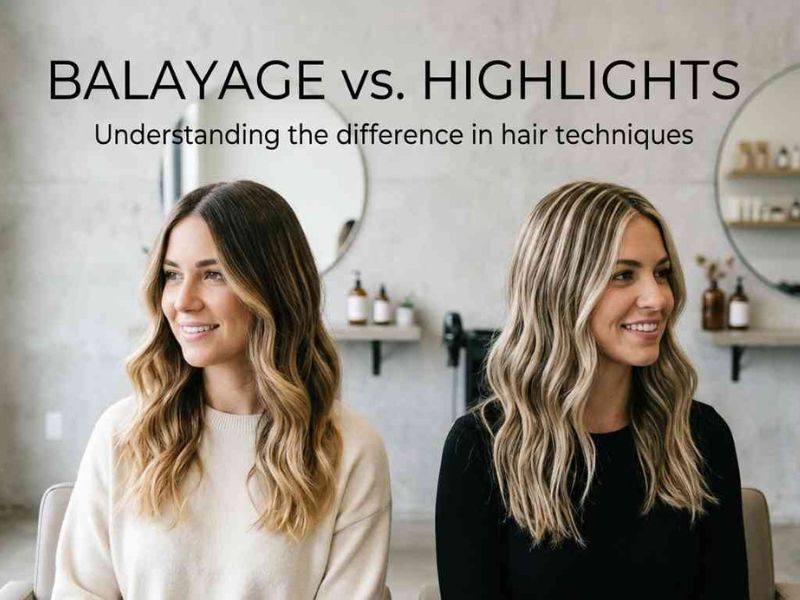
If you have ever shown a photo to a stylist and heard the words “balayage” and “highlights,” you are not alone. Both techniques lighten the hair and add dimension, but they do it in different ways and give different results.
This guide explains the difference between balayage and highlights in simple terms, so you can choose the best option for your hair, your lifestyle, and your budget.
What Is Balayage?
Balayage is a hand-painted lightening technique. Instead of wrapping every section in foil, the stylist “paints” lighter pieces onto the hair to create a soft, natural blend.
The goal is usually a sun-kissed look with a gradual transition from darker roots to lighter ends. Because it is painted by hand, balayage is customized to your haircut, your face shape, and how you style your hair.
How Balayage Looks
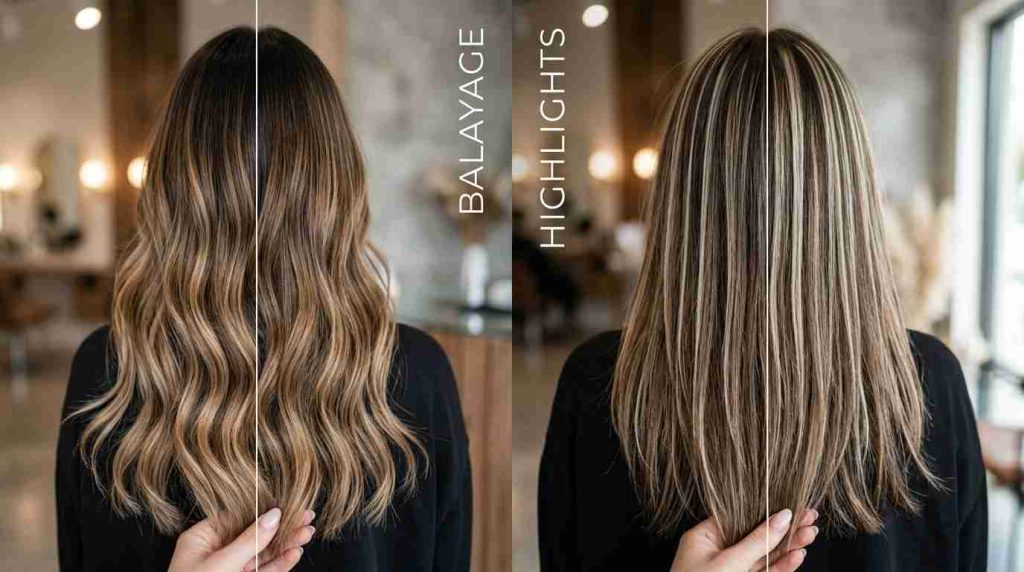
Balayage typically looks soft and lived-in. The lighter pieces are more noticeable through the mid-lengths and ends, with less brightness right at the roots. Many people like balayage because it grows out gently without a strong line.
How Balayage Is Applied
A stylist sections the hair and paints lightener onto the surface of selected strands. Some stylists use plastic wrap or cotton to separate sections, but traditional balayage is not fully foiled like classic highlights.
What Are Highlights?
Highlights are lighter strands placed throughout the hair to create contrast and brightness. Most traditional highlights are done with foils, which isolate the hair and allow for stronger, more even lightening.
Highlights can be very subtle or very bold depending on how many foils are used, how light the color is, and where the brightness starts.
How Highlights Look
Highlights often look more structured and “all-over.” You can get face-framing brightness, evenly spaced ribbons of color, or a high-impact blonde look. Highlights can also start close to the scalp, which makes them great for people who want brightness at the roots.
How Highlights Are Applied
A stylist weaves small sections of hair, applies lightener, then folds them into foils. Foils help the hair lift faster and lighter, which is one reason highlights are a popular choice for dramatic changes.
The Difference Between Balayage and Highlights
The main difference is the technique and the finish. Balayage is painted for a blended, natural grow-out. Highlights are usually foiled for a more defined, consistent pattern.
Here is a clear comparison.
| Feature | Balayage | Highlights |
|---|---|---|
| Application method | Hand-painted | Usually foils (woven sections) |
| Overall look | Soft, natural, sun-kissed | More structured, defined brightness |
| Root area | Typically darker/softer at roots | Can start right at the scalp |
| Grow-out | Gentler, less obvious line | More noticeable regrowth over time |
| Customization | Highly customized placement | Can be customized, but more patterned |
| Best for | Low-maintenance dimension | Strong brightness and even lightening |
Which One Is More Low Maintenance?
Balayage is usually the more low-maintenance choice because the roots are kept softer and the blend is gradual. Many people can go longer between appointments.
Highlights often need more frequent touch-ups if they start at the roots, because new growth becomes visible sooner.
Typical Maintenance Timeline
This can vary based on your natural color, how light you go, and how fast your hair grows, but these ranges are common.
| Service type | Common touch-up schedule | Best if you want |
|---|---|---|
| Balayage | Every 10–16 weeks (sometimes longer) | Soft grow-out and fewer salon visits |
| Partial highlights | Every 8–12 weeks | Noticeable brightness without a full head |
| Full highlights | Every 6–10 weeks | Maximum brightness and consistency |
Which Gives a More Natural Look?
Balayage is often the best option if you want hair that looks naturally lighter, especially through the ends. It mimics the way the sun lightens hair over time.
Highlights can also look natural, especially when done in fine sections with a soft toner. But they tend to look more “salon-fresh” and uniform than balayage.
Which Is Better for Going Much Lighter?
Highlights (especially foils) are often better for dramatic lightening, like going from medium brown to a bright blonde. Foils help lift the hair more evenly and can reach higher levels of blonde.
Balayage can still go quite light, but the goal is usually dimension and blend rather than a full, bright lift from roots to ends.
How to Choose Between Balayage and Highlights
The best choice depends on your goal, your hair type, and how often you want to maintain it.
Choose Balayage If You Want
- A softer, blended, “lived-in” look
- Less obvious regrowth
- Dimension focused on mid-lengths and ends
- A style that works well with waves and texture
Choose Highlights If You Want
- Brighter results from root to end
- More even lightness throughout the hair
- A classic blonde look or strong contrast
- A look that stays consistent all over
Can You Combine Balayage and Highlights?
Yes, and it is very common. Many stylists mix techniques to get the best result.
For example, you might get:
- Foiled highlights around the hairline for brightness near the face
- Balayage through the rest for a softer blend and easier grow-out
This combo can give you brightness where it matters most without making the whole look high maintenance.
What About Cost and Time in the Salon?
Pricing depends on your location, your hair length and thickness, and the stylist’s experience. In general, both can be a similar investment, but the time and future upkeep may differ.
Balayage appointments can take a long time because the placement is customized and blending matters. Highlights can also be time-consuming, especially full-head foils.
The bigger difference often shows up later: balayage may require fewer touch-ups, while highlights may need more frequent root maintenance.
Aftercare Tips for Both Balayage and Highlights
No matter which service you choose, aftercare makes a big difference in shine, tone, and hair health.
Simple Care That Helps
- Use a color-safe, moisturizing shampoo and conditioner
- Add a deep conditioning mask once a week
- Use heat protectant before blow-drying or ironing
- Limit very hot water, which can fade toner faster
- If you go blonde, ask your stylist how often to use purple or blue shampoo
Conclusion
The difference between balayage and highlights comes down to technique, finish, and upkeep. Balayage is hand-painted for a softer, more natural blend and an easier grow-out. Highlights are usually foiled for brighter, more structured lightness that can start right at the roots.
If you want a low-maintenance, sun-kissed look, balayage is often the better fit. If you want stronger brightness and a more consistent blonde effect, highlights may be the smarter choice. A good stylist can also combine both to match your hair goals and your lifestyle.