
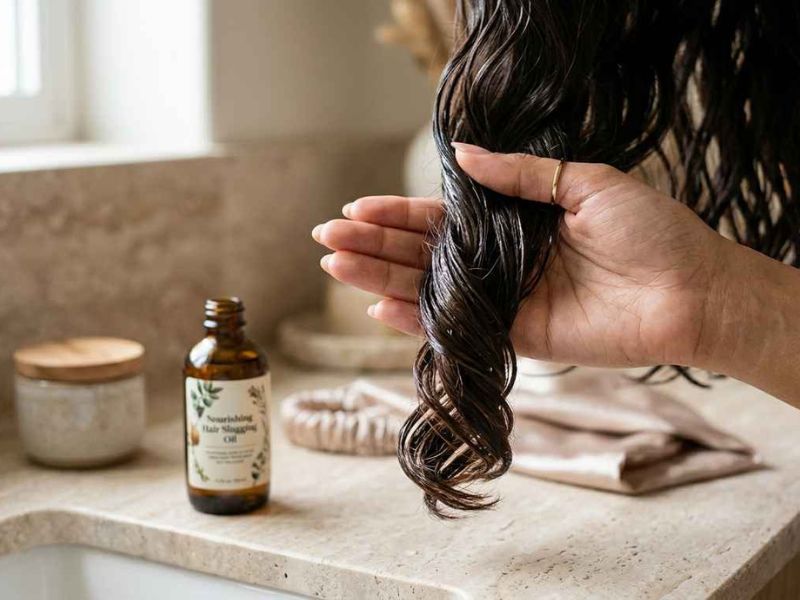
Hair trends come and go, but some stick around because they solve a real problem. Hair slugging is one of those trends. People try it when their ends feel dry, rough, or frizzy no matter how much conditioner they use.
This article answers the big question: what is hair slugging and does it actually work? You’ll learn what it is, who it’s best for, how to do it safely, what results to expect, and what mistakes can make it backfire.
What is hair slugging?
Hair slugging is a method where you apply an occlusive product (something that “seals”) to your hair—usually the ends—to help lock in moisture and reduce dryness.
The idea is borrowed from skincare slugging, where people apply a sealing layer at night to slow down moisture loss. With hair, slugging focuses more on reducing moisture loss from dry strands and protecting hair from friction while you sleep.
What “occlusive” means in hair care
An occlusive product forms a thin barrier on the surface of the hair. That barrier can help:
- Slow down moisture loss
- Reduce friction and tangling
- Make hair feel softer and look shinier
Occlusives do not “hydrate” hair on their own. They work best when there is moisture already present (from water, a leave-in conditioner, or a mask).
What hair slugging is not
Hair slugging is not:
- A treatment that repairs split ends permanently
- A replacement for conditioner
- A scalp oiling routine (for most people)
It’s mainly a moisture-sealing and protection step, especially for the mid-lengths and ends.
Does hair slugging actually work?
Yes, hair slugging can work, but it depends on your hair type, the product you use, and how you apply it.
What hair slugging can realistically do
Hair slugging may help you notice:
- Softer ends and less “crispy” feeling
- Less frizz, especially on dry hair types
- Better slip for detangling
- Reduced breakage from nighttime friction (in some cases)
- Shinier hair and smoother appearance
What hair slugging cannot do?
It cannot truly “heal” damage. If your hair is chemically damaged, heat-damaged, or split, slugging can improve the feel and look, but it won’t fuse the hair back together. Trims, gentler styling, and bond-building products (when needed) are what help long-term.
Why results vary so much
Hair slugging works best when:
- Your hair is dry, porous, or frizz-prone
- You use a small amount and keep it off the scalp
- You apply it over moisture (leave-in or damp hair)
It tends to work poorly when:
- Your hair gets oily fast
- You use too much product
- You use a heavy occlusive on fine hair
- You don’t clarify often enough, so buildup takes over
Who should try hair slugging and who should skip it?
Some people love hair slugging on the first try. Others feel greasy and weighed down. The difference is usually hair texture, density, and how dry the hair is.
Hair types that often benefit the most
Hair slugging is often a good match for:
- Curly and coily hair that loses moisture quickly
- Bleached or color-treated hair with dry ends
- High-porosity hair that feels rough and frizzes easily
- Long hair with fragile ends that tangle overnight
When hair slugging may not be a good idea
You may want to skip or modify hair slugging if you have:
- Very fine hair that gets weighed down easily
- Oily scalp with frequent limp roots (especially if product migrates upward)
- Scalp issues like dandruff, itching, or sensitivity (unless a professional suggests otherwise)
- Acne-prone skin around the hairline (heavy occlusives can trigger breakouts for some people)
Table: Quick guide to see if hair slugging fits your hair
| Hair concern/type | Is hair slugging worth trying? | Best approach |
|---|---|---|
| Dry, frizzy ends | Yes | Apply a tiny amount to ends over leave-in |
| Curly/coily hair | Often yes | Use a satin bonnet + focus on sealing moisture |
| Bleached or heat-damaged hair | Yes (for feel/appearance) | Combine with masks and regular trims |
| Fine, straight hair | Maybe | Use very light products and minimal amount |
| Oily roots | Usually no (or very limited) | Ends only, and clarify as needed |
| Scalp irritation/dandruff | Caution | Avoid scalp slugging unless advised |
How to do hair slugging step by step
Hair slugging is simple, but technique matters. The most common mistake is using too much product.
Step 1: Start with clean hair (or at least clean ends)
Slugging works best when the hair isn’t already coated in heavy oils and styling buildup. If your hair feels coated or dull, wash first.
Step 2: Add moisture first
Before slugging, apply one of these:
- Leave-in conditioner
- A light mist of water
- A hydrating cream (especially for curls)
This step matters because occlusives seal what’s already there. If the hair is dry and you apply a sealant alone, you may just trap dryness and get greasy results.
Step 3: Apply a tiny amount of occlusive to the ends
Rub a small amount between your palms and smooth it onto:
- The last 2–4 inches of hair
- Any extra-dry areas (usually the ends and outer layer)
Avoid the scalp unless you have a specific reason and know your scalp tolerates it well.
Step 4: Protect while you sleep
To make it work better (and keep your pillow clean):
- Use a satin/silk pillowcase
- Try a loose braid or pineapple
- Consider a bonnet if you move a lot at night
Step 5: Wash out or refresh in the morning (as needed)
Some people leave it in for the day. Others prefer to shampoo or co-wash to avoid heaviness. There’s no single correct way—your hair will tell you.
Table: Simple hair slugging routine options
| Routine | Best for | What you do |
|---|---|---|
| Overnight slugging | Very dry ends | Leave-in + occlusive on ends, sleep, refresh in AM |
| 1–2 hour pre-wash slug | Fine hair or buildup-prone hair | Apply to ends, wait, then shampoo/condition |
| Post-wash micro-slug | Frizz control | Tiny amount on damp ends after washing |
| “Ends only” maintenance | Oily scalp | Keep product strictly on ends, avoid roots |
What products are used for hair slugging?
There’s no single required product. The key is choosing something that seals without smothering your hair.
Common occlusive options
- Petrolatum-based ointments (very sealing, very heavy)
- Mineral oil-based products (sealing, usually slightly lighter than petrolatum)
- Silicones (good slip and shine, can build up on some hair)
- Heavy butters (like shea butter, depending on formula)
A lot of people use what they already own, but the texture and amount make all the difference.
Table: Popular product types and how they behave
| Product type | How it feels | Best for | Main downside |
|---|---|---|---|
| Petrolatum ointment | Very heavy, very sealing | Extremely dry ends | Buildup and greasiness if overused |
| Mineral oil-based | Heavy, smoothing | Dry hair that tangles | Can weigh down fine hair |
| Silicone serum | Lightweight slip, shiny | Frizz and detangling | Can build up without clarifying |
| Hair butter | Rich, softening | Coarse, curly hair | Can feel waxy on fine hair |
Hair slugging for different hair goals
Hair slugging for frizz
Slugging can reduce frizz mainly by smoothing the hair surface and limiting moisture swings. For best results, apply on damp hair and keep the amount small.
Hair slugging for hair growth
Hair slugging does not directly make hair grow faster. What it can do is support length retention by reducing breakage at the ends, which helps your hair stay longer over time.
Hair slugging for split ends
Slugging can temporarily make split ends look better by smoothing and coating them, but it won’t permanently fix them. If the ends keep splitting, the real solution is trimming plus gentler styling.
Mistakes that make hair slugging fail
Using too much product
This is the biggest reason people quit. Hair slugging should feel like a light seal on the ends, not like grease sitting on top of your hair.
Applying it to the scalp without needing to
For many people, scalp slugging leads to itchy buildup, limp roots, or breakouts around the hairline.
Skipping clarifying washes
If you use occlusives regularly, you may need a clarifying shampoo sometimes to reset your hair. Without it, hair can start feeling dull, heavy, or coated.
Slugging dry hair with no leave-in
Occlusives seal. They don’t hydrate. If you skip the moisture step, the result often feels disappointing.
How often should you do hair slugging?
Most people do best with moderation.
A realistic schedule
- Very dry, textured, or bleached ends: 1–2 times a week
- Normal to slightly dry hair: once a week or every other week
- Fine hair: occasional pre-wash slugging only, if at all
If your hair starts feeling heavy, stringy, or dull, take a break and clarify.
Conclusion
So, what is hair slugging and does it actually work? Hair slugging is a moisture-sealing method that can make dry ends feel softer, look smoother, and frizz less—especially when you apply it over moisture and use a small amount.
It won’t repair damage like a trim can, and it’s not for everyone, but as a simple add-on for dryness and breakage prevention, it can be genuinely useful.